Water Treatment
Hard Water and Softening: What Actually Happens in the Pipe
What makes water hard, why a millimetre of scale costs so much energy, how ion exchange actually works, and when conditioning beats softening.
What hardness actually is
Hardness is the concentration of dissolved calcium and magnesium in water, conventionally expressed as parts per million of calcium carbonate equivalent. Water picks these ions up as it moves through limestone, chalk and dolomite, which is why hardness is a geological property of your location rather than a fault in the supply.
Below roughly 60 ppm water is considered soft. Above 180 ppm it is very hard. Much of northern India sits well above that, and bore well supply is frequently harder still.
It is worth separating temporary from permanent hardness. Temporary hardness is bicarbonate based and precipitates when heated, which is what furs a kettle. Permanent hardness is sulphate and chloride based and stays in solution when heated. Most scale problems in heating and cooling plant are the temporary sort.
Why scale is expensive
Calcium carbonate has an unusual solubility characteristic. Most salts dissolve more readily as temperature rises. Calcium carbonate does the opposite, becoming less soluble in hotter water. The practical consequence is that it deposits preferentially on the hottest surface it can find, which in any heat exchanger is precisely the surface doing the work.
Scale conducts heat roughly one fiftieth as well as steel. A layer under a millimetre thick can therefore add a substantial percentage to the energy a chiller or boiler consumes for the same output. On a large plant running continuously, that shows up as a serious annual figure.
There are secondary costs too. Scale narrows pipe bores and raises pumping head, it blocks nozzles and distributes water unevenly, and it provides a rough surface that shelters microbiological growth from biocide.
How ion exchange softening works
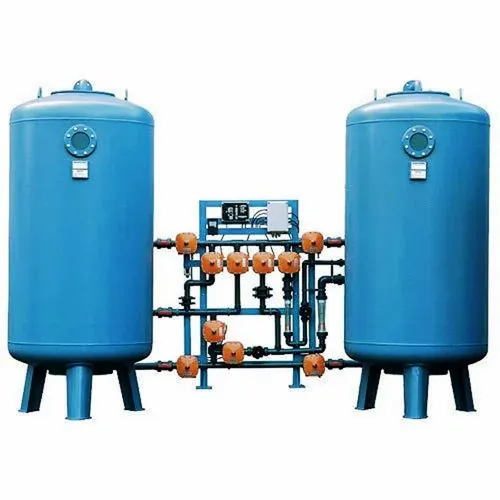
A softener is a pressure vessel filled with sulphonated polystyrene resin beads, each carrying exchange sites loaded with sodium ions. Hard water passes through the bed, and because the resin has a stronger affinity for divalent calcium and magnesium than for monovalent sodium, it captures the hardness ions and releases sodium in their place.
The water leaving the vessel is genuinely soft, typically below 5 ppm. Nothing has been added that will scale, because sodium salts remain soluble at any temperature the plant will reach.
The resin has finite capacity. Once the exchange sites are saturated, hardness begins to break through and the bed must be regenerated by flushing it with concentrated sodium chloride brine, which reverses the exchange by sheer weight of numbers. That regeneration cycle is the operational cost of softening: salt to buy and store, water to backwash, and brine effluent to discharge.
Sizing a softener properly
Three inputs determine the vessel and resin volume: inlet hardness in ppm, the daily volume of soft water required, and the acceptable interval between regenerations.
Multiply daily volume by hardness to get the daily hardness load. Divide by the working capacity of the resin, which is a known figure per litre, and you have the resin volume needed for one day between regenerations. Adjust for the interval you actually want.
Getting this wrong is common and expensive in both directions. Undersize the plant and hardness breaks through partway through a shift, which the process notices before anyone checks the softener. Oversize it and you pay for vessel, resin and regeneration salt you never needed.
When conditioning is the better answer
Softening removes hardness. Conditioning leaves it in the water but changes its behaviour so it does not bond to surfaces. Which one you want depends entirely on why you are treating the water.
If a process genuinely requires soft water, for boiler feed, for dyeing, for laundry, then you need a softener and there is no substitute. Boilers in particular concentrate feed water enormously and cannot tolerate hardness at all.
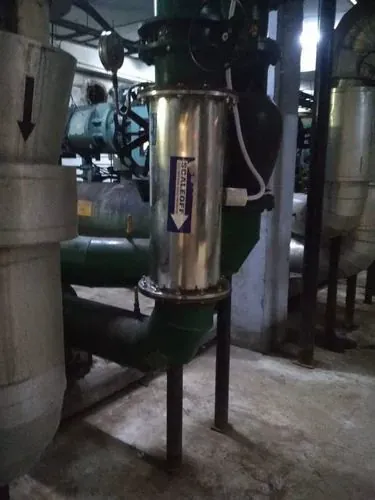
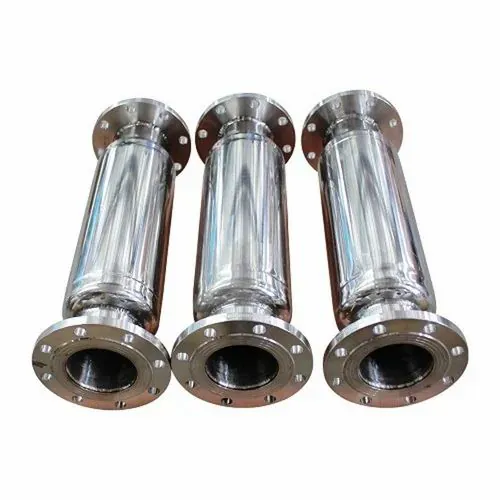
If your objective is simply to keep heat transfer surfaces clean in a cooling circuit, conditioning is usually the better commercial answer. There is no salt to buy, no regeneration water sent to drain, no brine discharge to consent, and no added sodium, which matters because softened water can be more aggressive to copper and mild steel than the hard water it replaced.