Water Treatment
Water Conditioner or Softener: Choosing Between Them
One removes hardness and one changes how it behaves. They are not interchangeable, and choosing the wrong one is expensive. Here is how to tell which your application needs.
They solve different problems
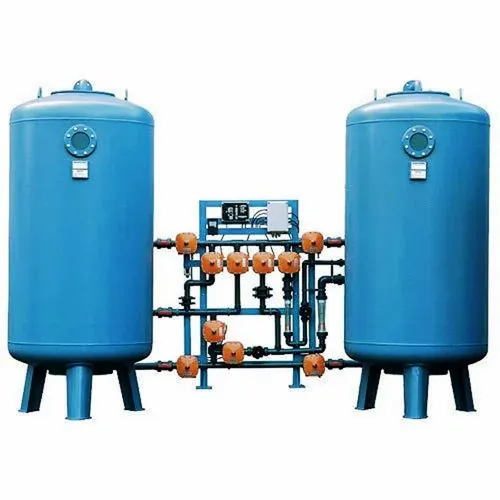
A softener removes calcium and magnesium from water by ion exchange, replacing them with sodium. What leaves the vessel is genuinely soft water containing almost no hardness.
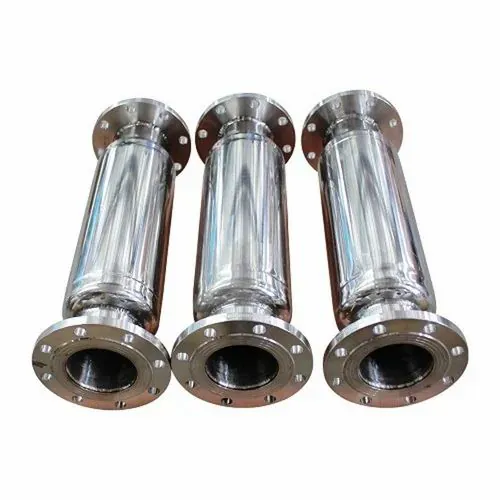
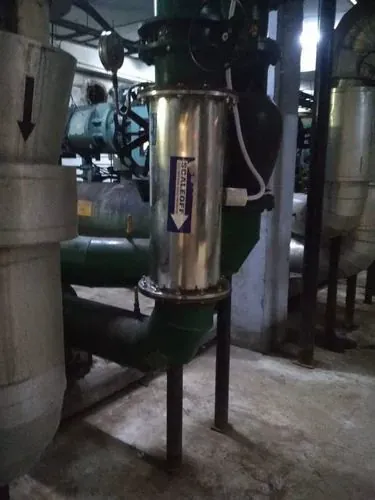
A conditioner removes nothing. The hardness is still there in the same total concentration, but its crystallisation behaviour has been altered so that it precipitates as a soft suspension rather than bonding to surfaces as hard scale.
That distinction is the whole decision. If the process needs the hardness gone, only a softener will do. If the goal is protecting heat transfer surfaces, a conditioner usually achieves it more cheaply.
What each costs to run
A softener has a real and recurring operating cost. Salt has to be purchased, delivered, stored and manually loaded. Each regeneration consumes water for backwash and rinse, typically several percent of throughput. The brine effluent needs somewhere to go, which on many sites means a discharge consent. Resin has a finite life and eventually needs replacing, and the control valve is a mechanical assembly that needs servicing.
A catalytic conditioner has no consumables, no power connection, no regeneration cycle, no effluent and no moving parts. After purchase the running cost is nil. That is the core of its commercial case and the reason payback is usually measured in months on a plant of any size.
The corrosion question
This is underdiscussed and matters more than most specifications acknowledge.
Softened water can be more corrosive than the hard water it replaced. In hard water, a thin layer of calcium carbonate forms on pipe walls and acts as a protective film. Remove the hardness entirely and that film cannot form, leaving the metal exposed. Sodium added during exchange also raises conductivity slightly, which does not help.
In older mild steel and copper systems, replacing hard water with fully softened water has been known to unmask corrosion that the scale layer was previously concealing. Conditioning avoids this, because the water chemistry is unchanged and the protective film still forms.
On magnetic devices specifically
The category labelled magnetic or electromagnetic water treatment deserves separating from catalytic treatment, because they are frequently sold under similar language and the evidence for them is not equivalent.
Magnetic devices apply a field across the flow and rely on that field to influence crystallisation. Independent results have been mixed, and performance is sensitive to flow rate, water chemistry and installation detail in ways that make consistent field performance hard to guarantee.
Catalytic units work by direct contact with a treated surface inside the chamber, which provides the nucleation sites. There is no field involved and no electrical supply. Some long established catalogue names in this market still carry the word magnetic for historical reasons even where the underlying technology is catalytic, so it is worth asking any supplier directly which mechanism their product actually uses.
Choosing for your application
Specify a softener where the process genuinely requires soft water. Boiler feed is the clearest case, since boilers concentrate feed water enormously and tolerate no hardness at all. Textile dyeing, commercial laundry and certain food processes also need real softening for product quality reasons.
Specify a conditioner where the objective is keeping heat transfer surfaces clean. Cooling tower circuits, chiller condensers, heat exchangers and closed loops on hard make up water all fall here. So does any site where salt handling, brine discharge or chemical storage is unwelcome.
Where a site has both requirements, the sensible arrangement is often a softener sized only for the process stream that truly needs it, with conditioning on the much larger cooling circuit. Sizing a softener for the whole site when only a fraction needs soft water is a common and costly specification error.