Cooling Towers
FRP or Timber Cooling Towers: How to Choose
Timber towers dominated for decades and still have a niche. Here is an honest comparison against FRP on corrosion, lifespan, installation and the cost that actually matters, which is lifetime cost.
Why the construction material drives everything else
A cooling tower spends its entire life saturated, warm and ventilated. That combination is close to ideal for biological growth and for chemical attack, and it is unforgiving of any material that is not fundamentally inert. The material you choose determines service life, maintenance burden and how the tower behaves in the last third of its life rather than the first.
Timber towers, usually treated softwood, were the industry standard for most of the twentieth century and are still built today. Fibre reinforced plastic has displaced them across the majority of new installations, but the reasons are worth understanding rather than assuming.
Corrosion, rot and water chemistry
Timber is an organic material in a warm wet environment. Preservative treatment slows fungal attack considerably but does not stop it permanently, and the treatment leaches over time. Where circulating water is chemically dosed, or where the plant runs at high cycles of concentration, degradation accelerates. Panels warp, joints open and leak, and structural members lose section.
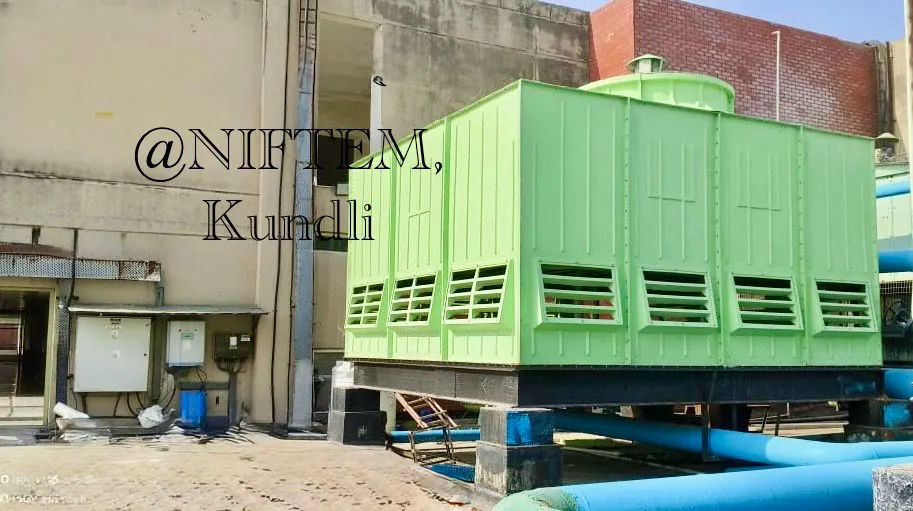
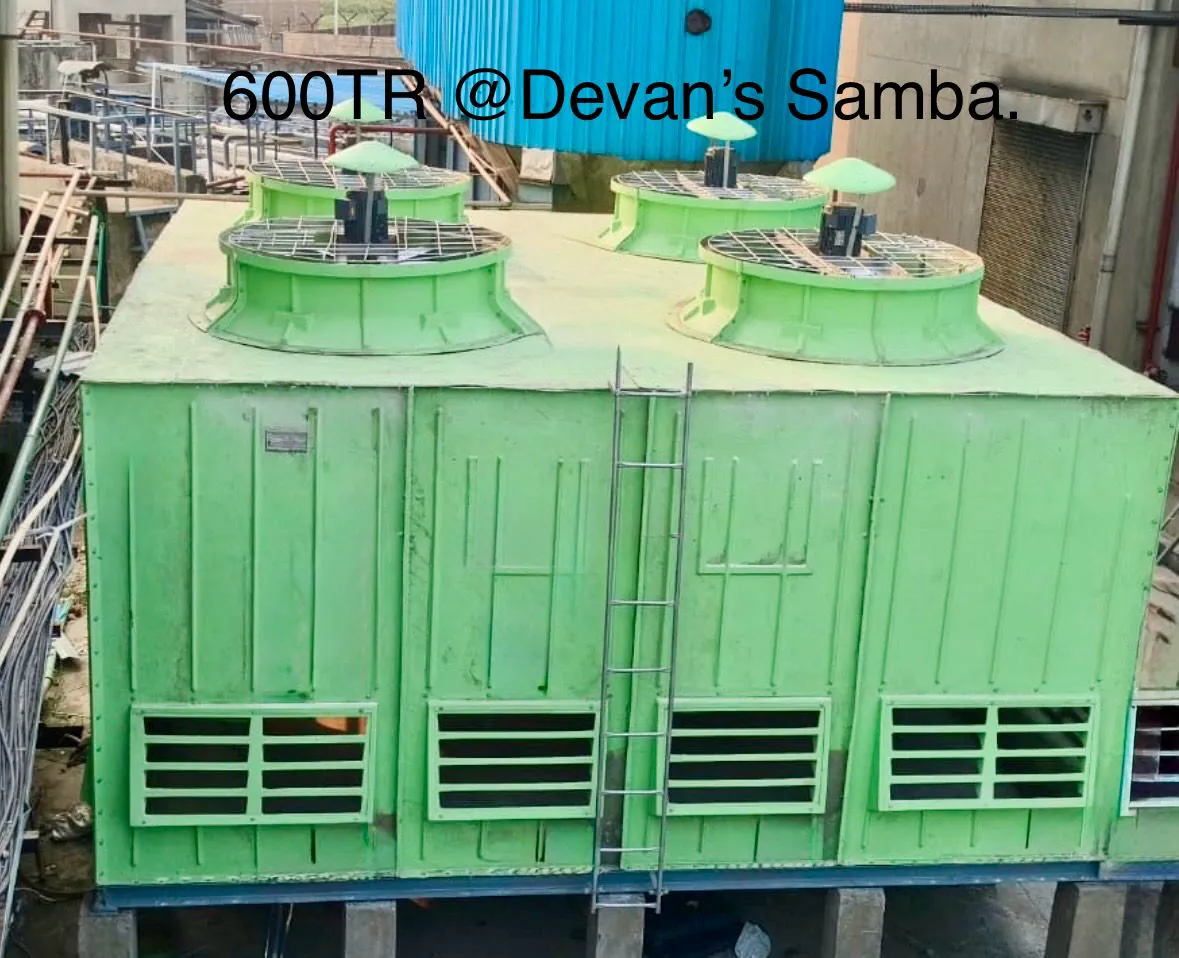
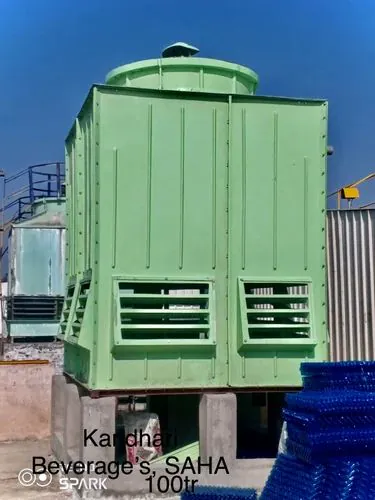
FRP has no organic component for fungi to attack. The glass reinforcement carries load and the resin matrix is chemically inert across the pH range cooling water realistically reaches. It will not rot and it cannot rust. In distilleries, chemical plants and coastal installations, this difference is decisive rather than marginal.
The honest counterpoint is that FRP is vulnerable to ultraviolet degradation if the gel coat is poor, and to impact damage in a way timber is not. A UV stabilised gel coat addresses the first. The second is a handling discipline during erection.
Weight, installation and structural load
Moulded FRP panels are light. They can usually be lifted and positioned by hand or with light lifting equipment, which shortens erection and reduces the cranage a site needs. The supporting steelwork or civil basin carries less dead load, which shows up as a real saving on the structural package.
Timber towers are heavier, need more substantial support, and take longer to erect because there are far more individual members to place and fix. On a retrofit into an existing plant room or onto an existing terrace, the weight difference frequently decides the matter on its own.
Maintenance burden over the service life
A timber tower needs periodic inspection of structural members, replacement of degraded boards, and attention to fixings that loosen as the wood moves through wet and dry cycles. That work is skilled, it recurs, and it usually requires the cell to be off line.
An FRP tower concentrates maintenance on the wear parts, which are the fill, nozzles, drift eliminators and drive train. Those are consumables on any tower regardless of construction. The shell itself is essentially maintenance free, so the annual cost is lower and more predictable.
Total cost of ownership
Comparing purchase prices alone is misleading. A timber tower can look competitive at tender and cost considerably more across fifteen years once refurbishment cycles, structural repairs and the associated downtime are counted.
The sensible comparison is annualised cost including maintenance labour, parts, downtime and expected replacement point. On that basis FRP wins in most applications, which is why it has become the default rather than because of any single headline property.
Where timber still makes sense
Very large field erected towers, particularly older installations where the structure is sound and only the fill and internals need renewal, are often better refurbished than replaced. Rebuilding a sound timber structure with new fill and mechanical equipment can be the most economical route by a wide margin.
For new installations at the capacities most plants need, from a few tens of tons of refrigeration up to a thousand and beyond, FRP is the more durable and more economical choice. If you have an existing timber tower and are unsure whether to refurbish or replace, have the structure surveyed before committing either way.